
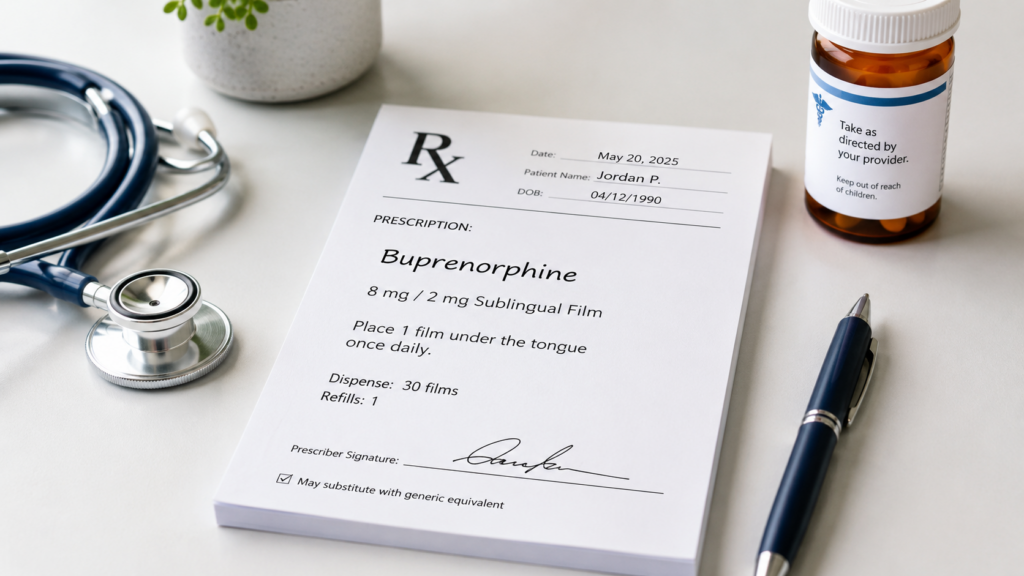
If you hear “medication-assisted treatment” or “medications for addiction treatment” (MAT) and immediately think “that’s for opioids,” you’re not alone — and you’re only getting part of the picture.
MAT pairs FDA-approved or clinically supported medications with counseling and support, like outpatient and intensive outpatient in Long Beach, to treat substance use disorder (SUD). It’s one of the most researched, effective approaches in addiction medicine. And while opioid use disorder gets most of the attention, medication can play a role in treating a much wider range of SUDs than most people realize.
The medications you’ve probably heard of
For opioid use disorder, the FDA has approved medications like buprenorphine, methadone, and naltrexone. For alcohol use disorder, options include naltrexone, acamprosate, and disulfiram. These medications work in different ways — some reduce cravings, some ease withdrawal, some block the rewarding effects of a substance — but they all share the same goal: making recovery more manageable so the rest of the work can happen.
The medications most people don’t know about
Here’s what a lot of people are surprised to learn: even when there’s no medication specifically FDA-approved for a substance, that doesn’t mean medication isn’t an option.
For stimulant use disorder (methamphetamine, cocaine), providers sometimes use medications originally developed for other conditions — like certain antidepressants — off-label, based on clinical evidence that they can help reduce cravings and support recovery.
The same is true for cannabis use disorder, which currently has no FDA-approved medication at all. Providers may still recommend off-label options to help manage withdrawal symptoms, sleep disruption, or cravings while someone works on cutting back or quitting.
“Off-label” doesn’t mean unproven or risky — it means the medication is approved for something else, and a provider has determined, based on clinical research and your specific situation, that it may help you too. It’s a normal, common part of addiction medicine, but it’s rarely talked about outside of a provider’s office.
You don’t have to decide anything today
One of the biggest misconceptions about MAT is that you have to be “all in” before you even walk through the door. You don’t.
Meeting with a provider doesn’t mean committing to a medication, a program, or a specific treatment plan. It means getting real answers to real questions: What would this actually look like for me? Am I a candidate for medication? What are the risks and benefits? What else is involved?
You can ask those questions, get honest information, and decide from there — on your own timeline.
MAT for every substance use disorder, with Medi-Cal accepted
At Roots Through Recovery, we provide MAT for the full range of substance use disorders — not just opioids — and we accept Medi-Cal for anyone in Long Beach or Los Angeles County. Cost and insurance shouldn’t be the reason someone doesn’t get information they need.
If you’ve been curious about whether medication could help you or someone you love — whether that’s for opioids, alcohol, stimulants, cannabis, or something else — the easiest next step is just a conversation.
Ready to learn more? No strings attached. Schedule a consultation: roots-recovery.com/schedule_consultation Or call us at (562) 414-5231
