
The Wake-Up Call No Parent Wants—but Needs
Finding out that your teen may be experimenting with drugs or alcohol can feel like a punch to the gut. You might feel fear, confusion, or even guilt—but you’re not alone, and help is available. Understanding what drives teen substance use, recognizing the warning signs, and learning how to respond with compassion can make all the difference in your child’s life.
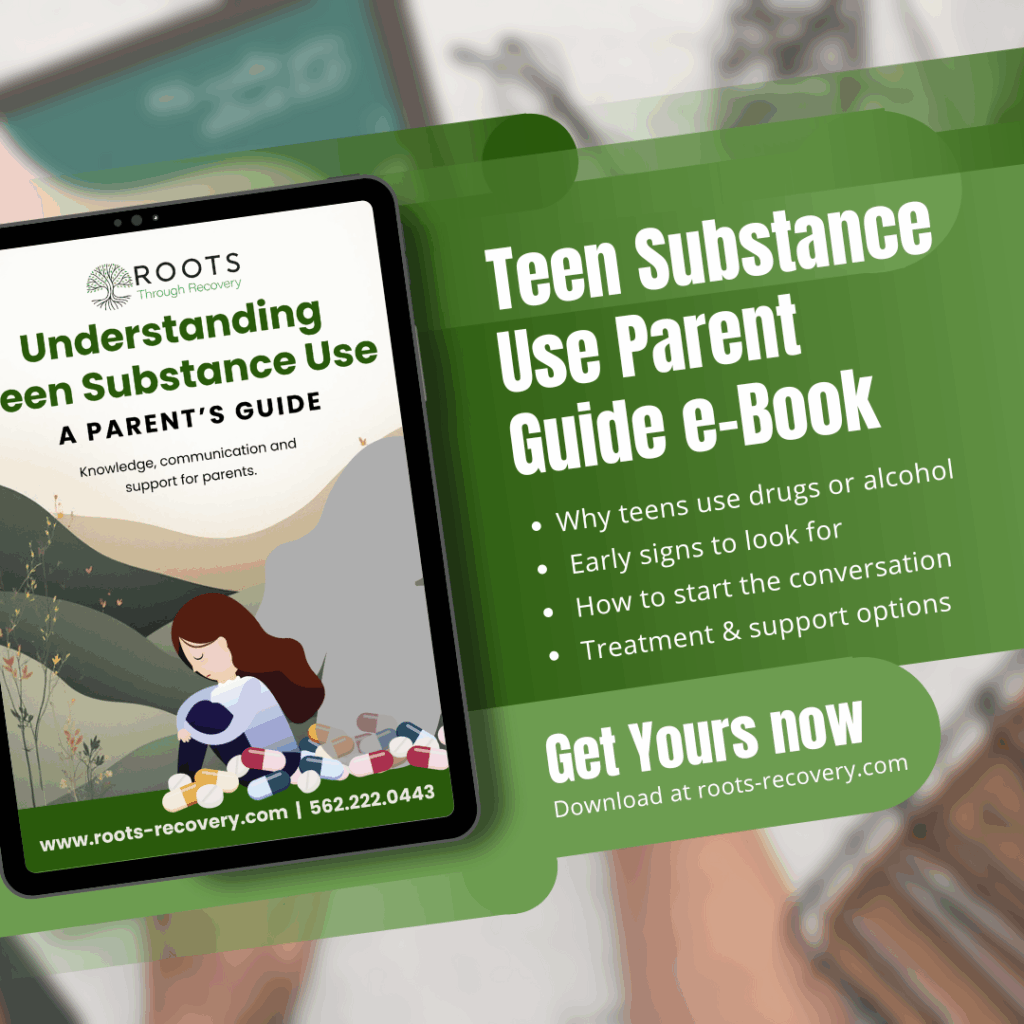
At Roots Through Recovery, we’ve created a free eBook—“Understanding Teen Substance Use: A Parent’s Guide”—to help parents like you navigate this challenging topic with knowledge, confidence, and hope.
Why Teens Use: It’s More Than Just “Experimentation”
Adolescence is a time of intense brain development, emotional growth, and social pressure. Teens often turn to substances for complex reasons—curiosity, stress relief, peer acceptance, or to self-medicate underlying mental health challenges.
The teenage brain is still developing, especially in areas responsible for decision-making and impulse control. This makes teens more vulnerable to risky behaviors and less likely to consider long-term consequences. Understanding why your teen may be using is the first step toward helping them make healthier choices.
Recognizing the Signs Early
It’s not always easy to tell when your teen is struggling. Changes in mood, energy, or friends can be brushed off as “normal teenage behavior,” but when multiple signs appear together, it’s time to take a closer look.
Common warning signs include:
- Sudden changes in sleep, appetite, or grades
- Withdrawal from family and longtime friends
- Increased secrecy, lying, or defensiveness
- Mood swings or loss of motivation
- Finding drug paraphernalia or unfamiliar smells on clothing
Trust your instincts—you know your child best. If something feels off, it’s worth starting a conversation.

How to Talk to Your Teen (Without Pushing Them Away)
One of the most powerful things a parent can do is open the lines of communication. But how you talk about substance use matters.
In the eBook, we share 10 research-backed tips for starting these tough conversations, including:
- Choosing the right time and place
- Leading with curiosity, not accusations
- Listening more than you talk
- Avoiding lectures and shame
- Offering support and setting clear expectations
The goal isn’t to control your teen—it’s to connect with them. A supportive, non-judgmental approach can foster honesty and trust when it’s needed most.
When to Seek Help
If you suspect or know that your teen is using substances, don’t wait. Early intervention can prevent deeper issues and increase the chances of recovery.
At Roots Through Recovery, we offer trauma-informed, family-centered outpatient programs designed specifically for teens. Our approach focuses not only on substance use, but on the underlying causes—stress, trauma, mental health challenges, and family dynamics.
Whether your teen needs individual therapy, intensive outpatient treatment (IOP), or family support, we’re here to help.
Parenting a teen who’s struggling with substance use can feel isolating—but you don’t have to do this alone.
Download your free copy of Understanding Teen Substance Use: A Parent’s Guide today to learn how to spot the warning signs, start the right conversations, and find the support your family needs.
📞 Call us at 562-222-0443 or click here to learn more about our teen program.
